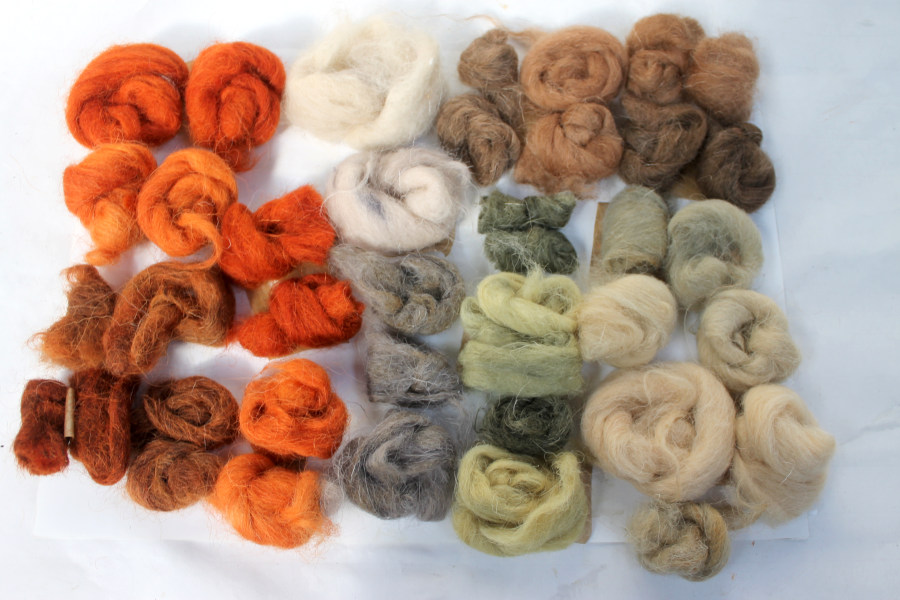
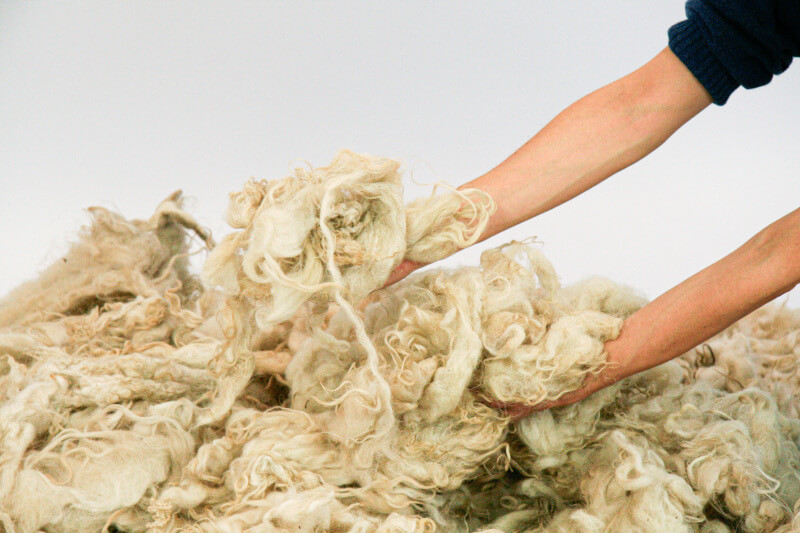
"Waste is only waste until someone sees the resource"
Coarse wool is treated as waste across Europe. It is burned or landfilled and the farmers who shear it often earn less than the cost of shearing. Synthetics pushed wool to the margins of the textile market decades ago and today large quantities of raw wool have become a disposal problem instead of an income source - (Rajabinejad, Buciscanu & Maier, 2018).
Wool research is a program core at Fabricademy, a continuous line of work carried by participants since 2017 and by a network of research labs across Europe, three alumni in the 2025-26 cohort alone.
Wool House — Claire Jouanchicot (Basque Country, France)
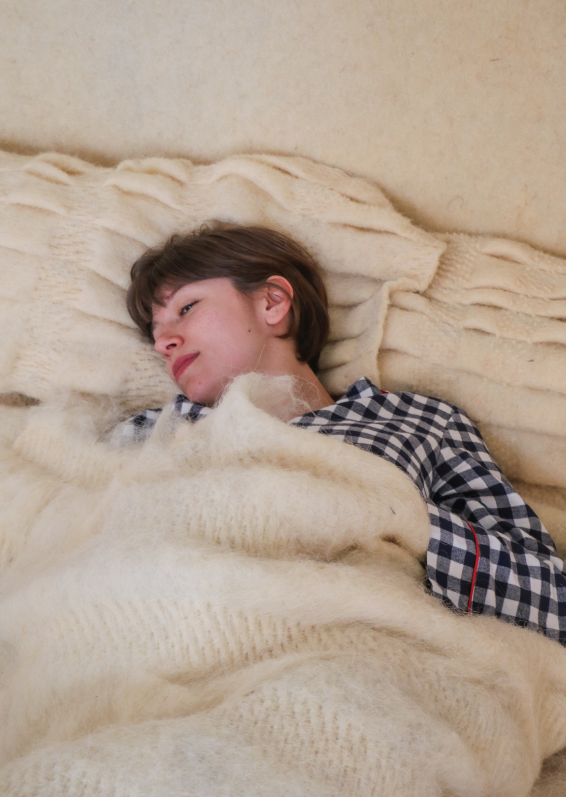
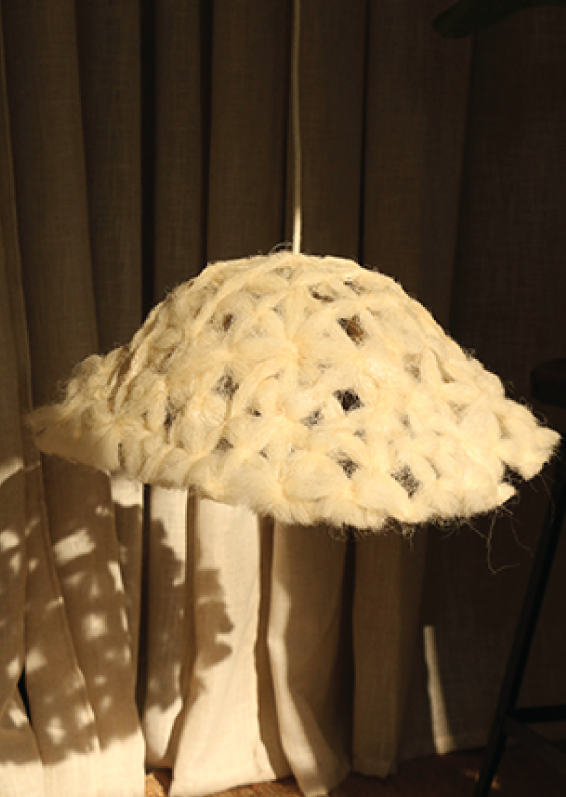
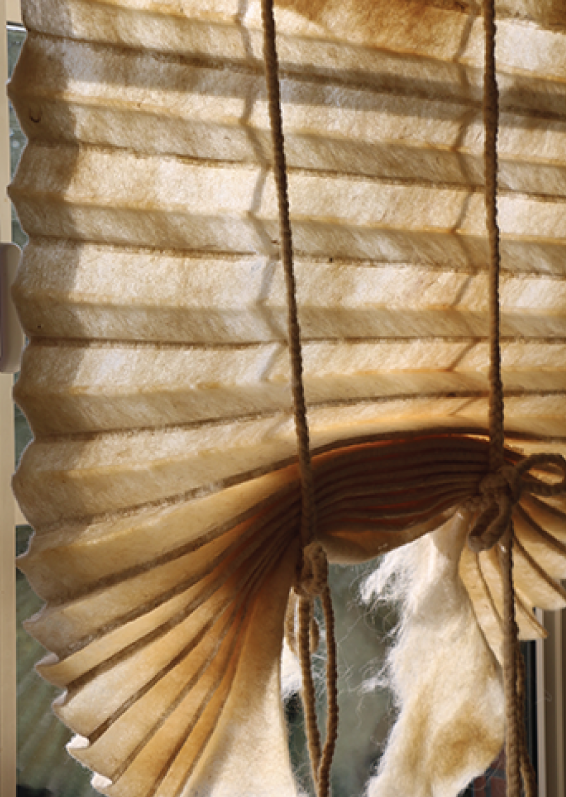
Manech sheep wool from the Basque Country is a local resource that is routinely discarded. Claire's Wool House valorises it through needle felting and bio-binders, transforming raw fibres into structural and poetic objects for domestic space, such as bed, stool, light, curtains, anchored in territorial memory.
Wool & Flow — Martina Muroni (French Alps, Woolshed)
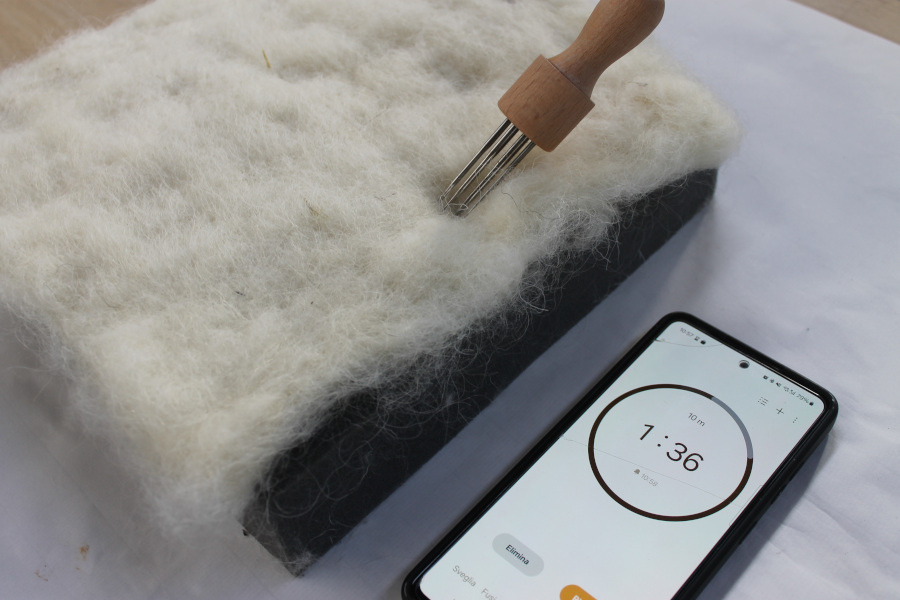
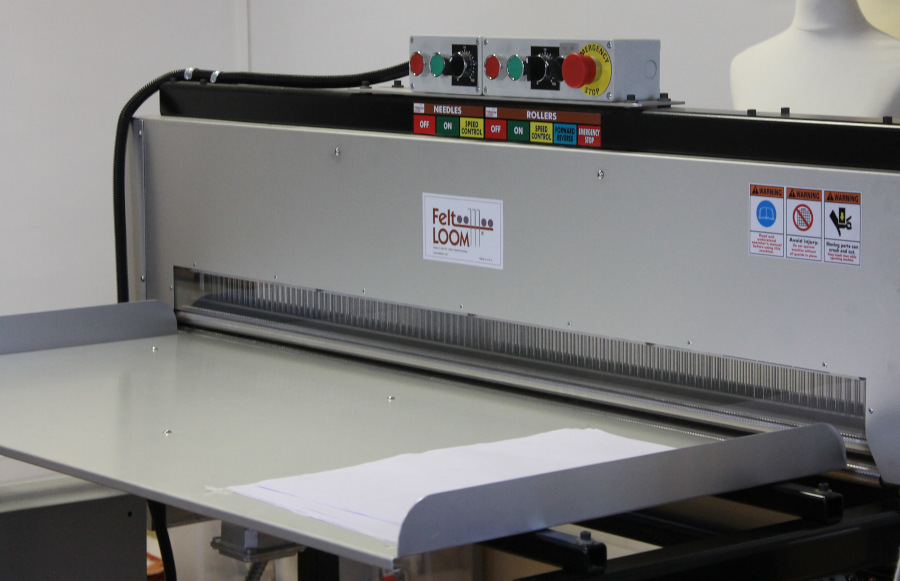
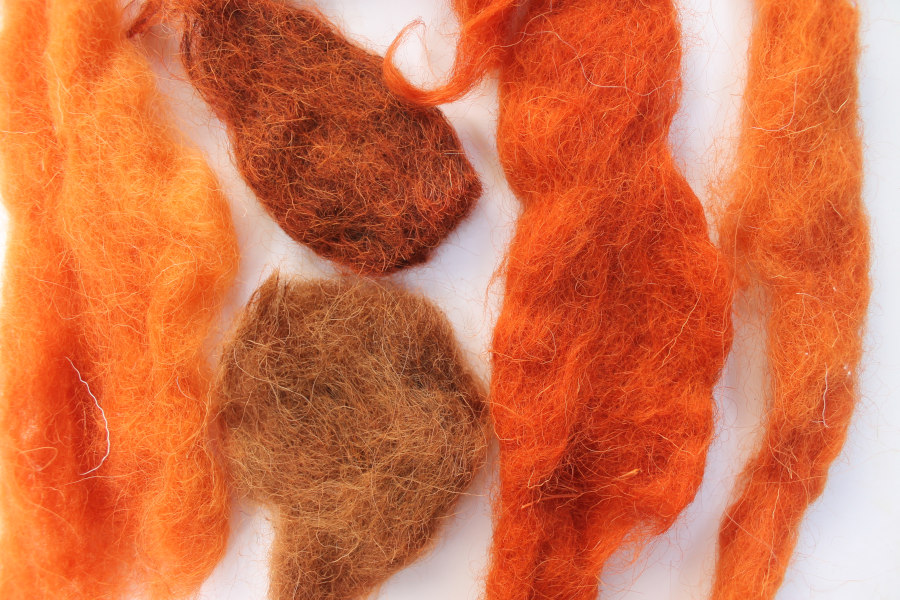
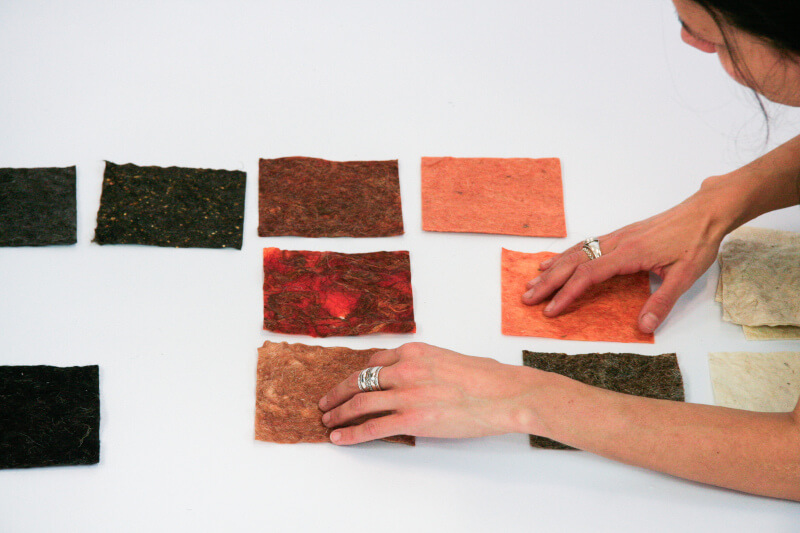
Wool & Flow by Martina Muroni rethinks the role of water in transforming rustic wool.
Across washing, dyeing, felting and biocomposite creation, the designer treats water as a resource to be reduced, reused and reimagined. Her research tests suint fermentation — scouring wool with its own natural wash water — across Alpine sheep breeds, and extends through dialogue and experimentation with farmers, designers and Woolshed partners. The work is explicitly collaborative and locally rooted.
Woolbridge — Diana Castillo (French Alps, Woolshed)
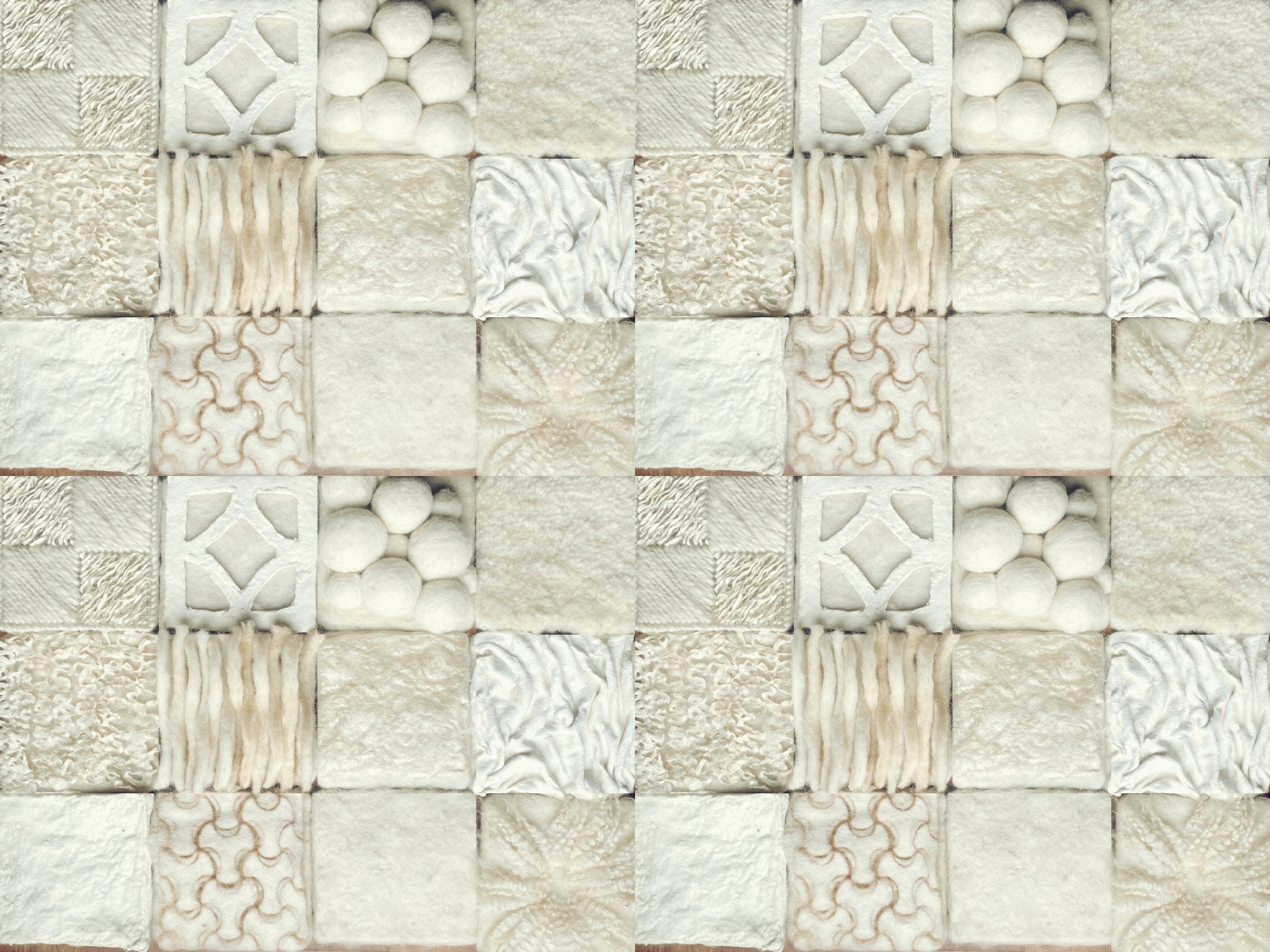
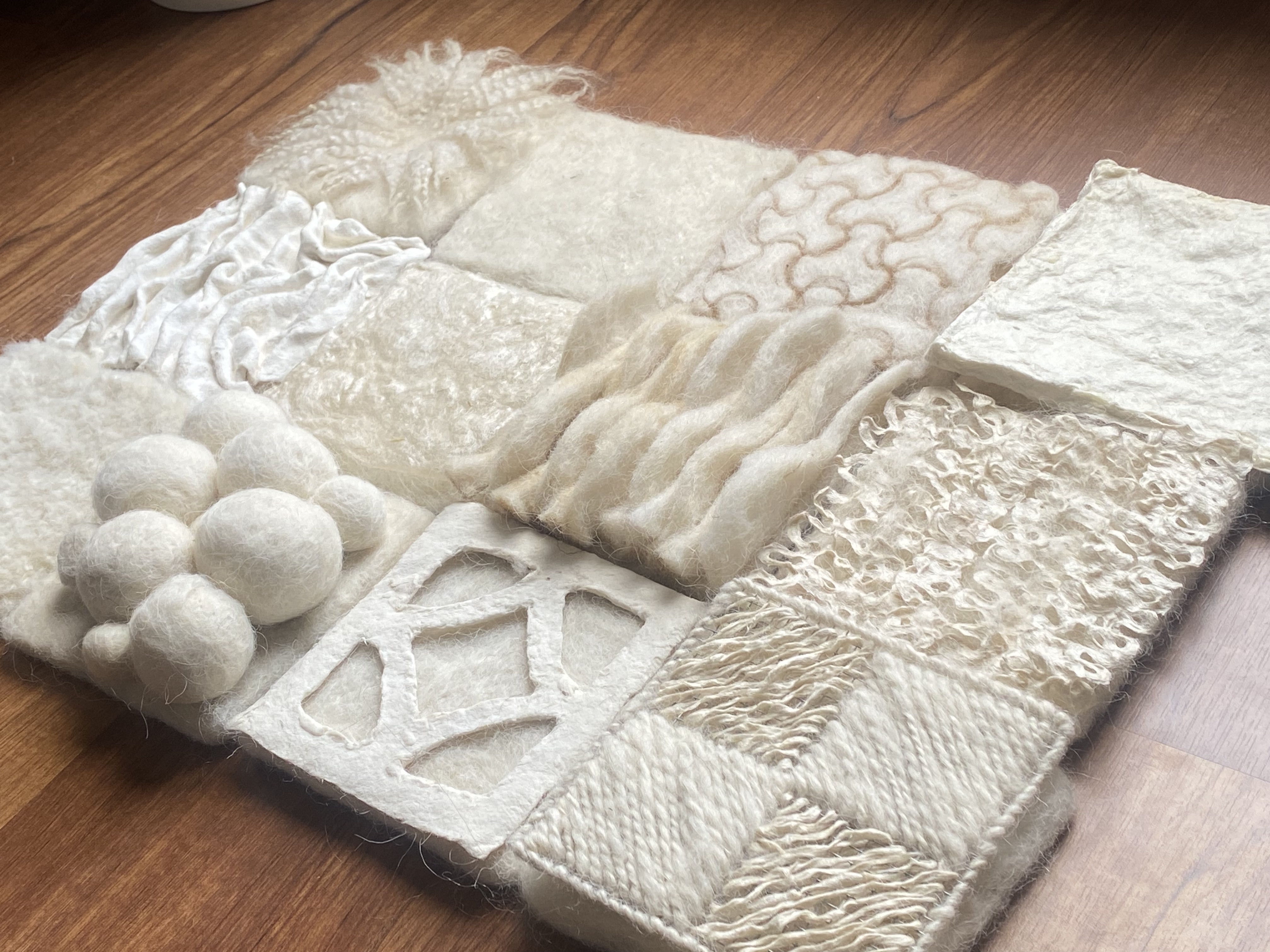
The Thônes & Marthod, a hardy sheep breed native to the French Alps, produces coarse wool "that doesn't make the cut for fine textiles" and is discarded. Woolbridge redirects it to construction. Wool is naturally fire-resistant, breathable and moisture-regulating, with strong acoustic and thermal properties — the construction industry needs exactly this. Diana Castillo built on the Woolshed program's knowledge and resources, and works from the start with the full adoption chain: farmers, processors, architects, contractors and building standards. The project is in proof-of-concept phase, prototyping promising construction and acoustic applications.
The Fabricademy network and research labs
The #SheMakes program: open lab-to-lab wool research
The wool research began as an open, collaborative research space. Shemakes labs shared one motivation: to rehabilitate wool knowledge — from processing wool at different scales to designing through sustainable processes. Learning from one another, bringing wool knowledge and practices back to Europe.
She Makes Lab-to-Lab Research programme, structured in three working groups that cover the full wool chain:
- PLACES — Territorial wool ecosystems: mapping local actors "from sheep to fabric" — farmers, spinners, weavers, waste management — to strengthen locally productive territories.
- DESIGN — Local dyes for sustainable territories: reviving botanical, mineral and fungal dyeing so local wool stops travelling abroad to be coloured.
- MAKE — Little wool factories: redesigning small-scale processing tools with digital fabrication, so small wool quantities — too small for industry, therefore wasted — become usable.
The continuation: Woolshed in the Alpine Space
The research scaled. Woolshed — A New Era for Alpine Wool is the continuation and evolution of the She Makes lab-to-lab wool research, focused on the Alpine Space. Funded by the Interreg Alpine Space programme (2024–2027, €1.79M total / €1.27M ERDF) and led by IUAV University of Venice, Woolshed brings together eight partners in Italy, Switzerland, Slovenia, France and Austria to transform coarse wool waste into a valuable resource, through affordable, open-source, user-friendly technologies for small-scale wool processors.
Two Woolshed partners carry Fabricademy alumni: Pauline Gamore (Fabricademy 2019-20) is the Woolshed contact at Le Textile Lab in Lyon, which coordinates the Rhône-Alpes pilot and leads the project's MAKE work package; Cristina Olivotto (Fabricademy 2017-18) is the contact at Onl'fait in Geneva. The MAKE working group that began in the She Makes handbook now runs as a funded work package across five Alpine territories.
Zoe Romano — Fabricademy's global lecturer and partner — is part of the project too. She authored the Woolshed Factory Definition, Woolshed's core deliverable defining the factory infrastructure for small-scale wool processing. And with Centro Consorzi, the Veneto pilot partner, she and Fabricademy participant Martina Muroni are testing suint fermentation — rethinking wool washing for Alpine communities.
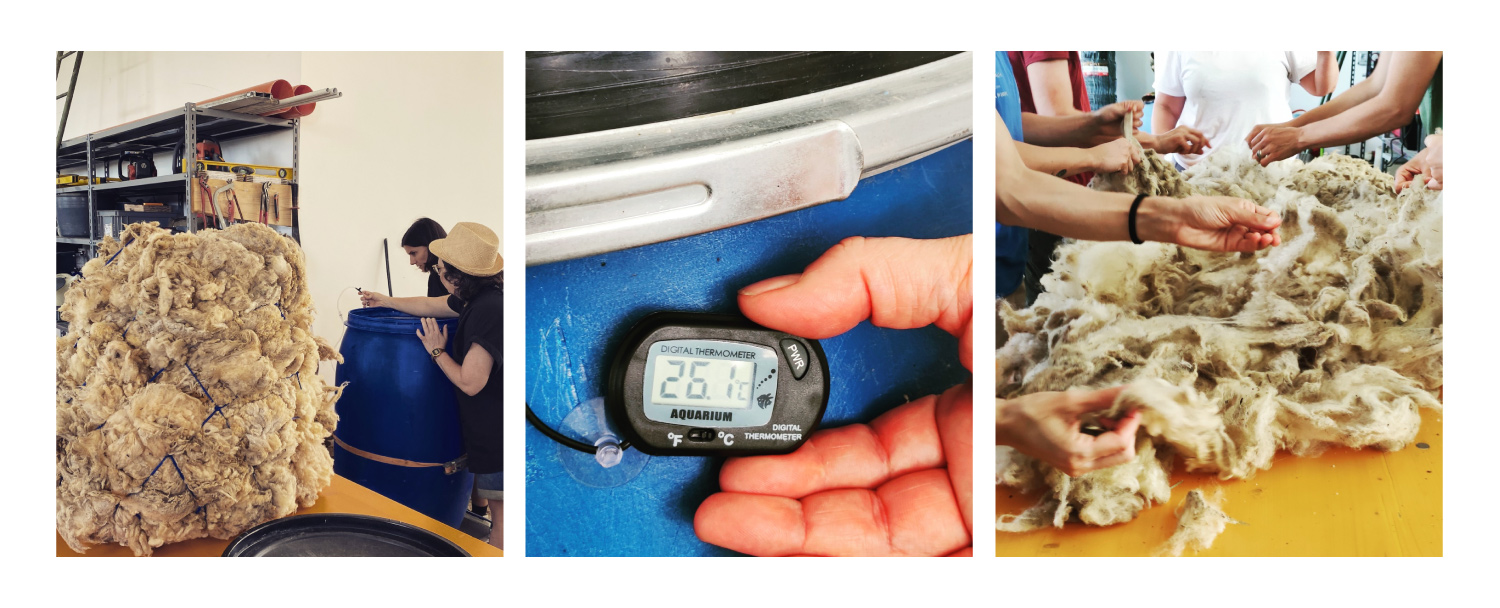
Photo credits: Martina Muroni
Earlier roots: Wool beyond clothing
Roots | AmberGrain Project by Barbara Rakovská
(Fabricademy 2023-24)
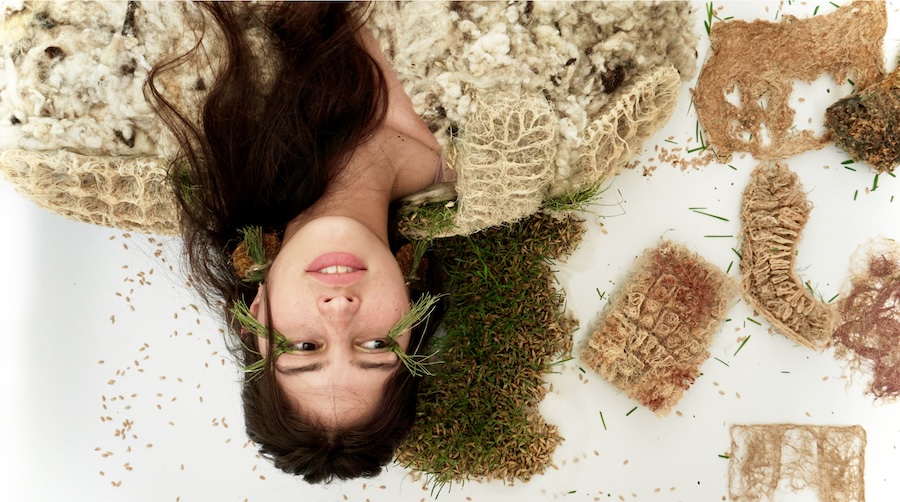
Working with short fibres of waste wool from Mallorca, Barbara's Roots project used wool as a growing medium: wool is highly absorbent and breathable, ideal for root growth. She grew wheatgrass in raw wool, then felted the used substrate into garments inspired by traditional Slovak folk costumes, seeding them so the wearer carries a living surface. Her felting techniques — learned in a workshop with artist Claudy Jongstra and adapted with an electric sander for large pieces — are documented openly.
beGROUNDED | By Lara Campos
(Fabricademy 2018-19)
Lara's beGROUNDED "growing clothing to feel nature" came with a fully biodegradable kit and established the regenerative instinct that later wool projects formalise: a garment's relationship with soil does not have to end at compost.

The Fabricademy Program
Fabricademy participants train the skills behind these projects in the 6-month program: biomaterials, digital fabrication, technical textiles processes and digital craftsmanship — 13 hands-on projects guided by global experts and local mentors in 15+ labs worldwide.
To work on your territory's wool — or any wasted fibre apply at a lab close to you, or from home, anywhere in the world**. Applications for the next cycle are open.

Projects: Wool House (Claire Jouanchicot, 2026) · Woolbridge (Diana Castillo, 2026) · Wool & Flow (Martina Muroni, 2026) · Roots (Barbara Rakovská, 2023-24) · beGROUNDED (Lara Campos, 2018-19). Foundation and continuation: She Makes Lab-to-Lab Wool Research · Woolshed, Interreg Alpine Space (IUAV Venice lead; Le Textile Lab, Onl'fait, Laines d'ici, Centro Consorzi, KGZS Nova Gorica, InnoRenew, Impact Hub Vienna). References: Rajabinejad, Buciscanu & Maier (2018); Herrero (2020); Lemmer-Webber (2021); Sebillotte Cuchet (2014).