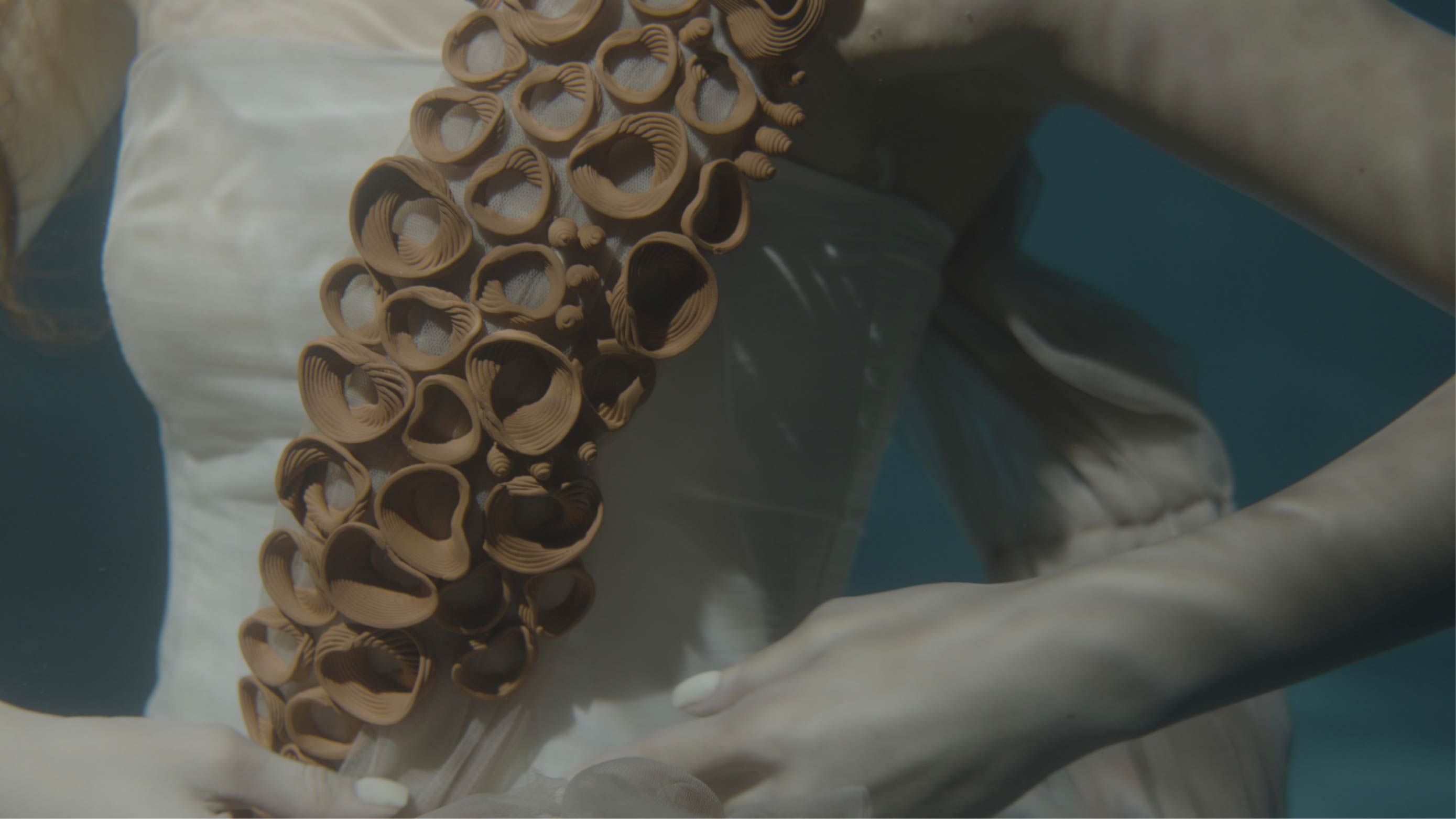
Terracotta 3D Printing in Design: From Wearable to Marine Habitat.
A wearable made of 3D-printed clay ending its life as an artificial reef.
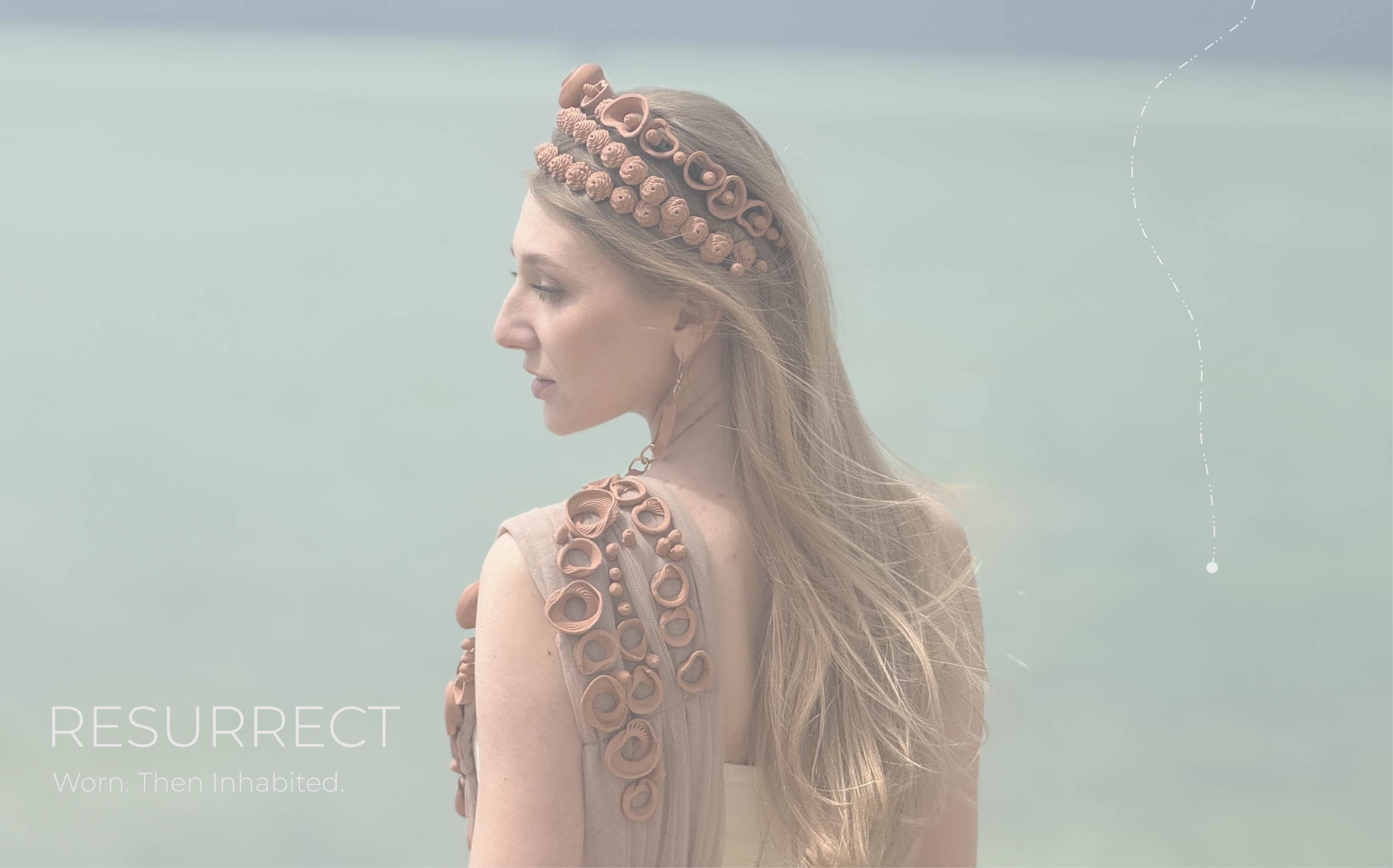
What if a piece of fashion didn't end its life in a landfill but began a second one underwater, as a home for marine life?
That is the question behind Resurrect, a final project by Fabricademy student Simone Kiswani, built with terracotta 3D printing and an idea called the more-than-human perspective.
It's a garment. It's also a reef. And it's a working example of what additive manufacturing can do when design stops treating nature as a backdrop but as a client.
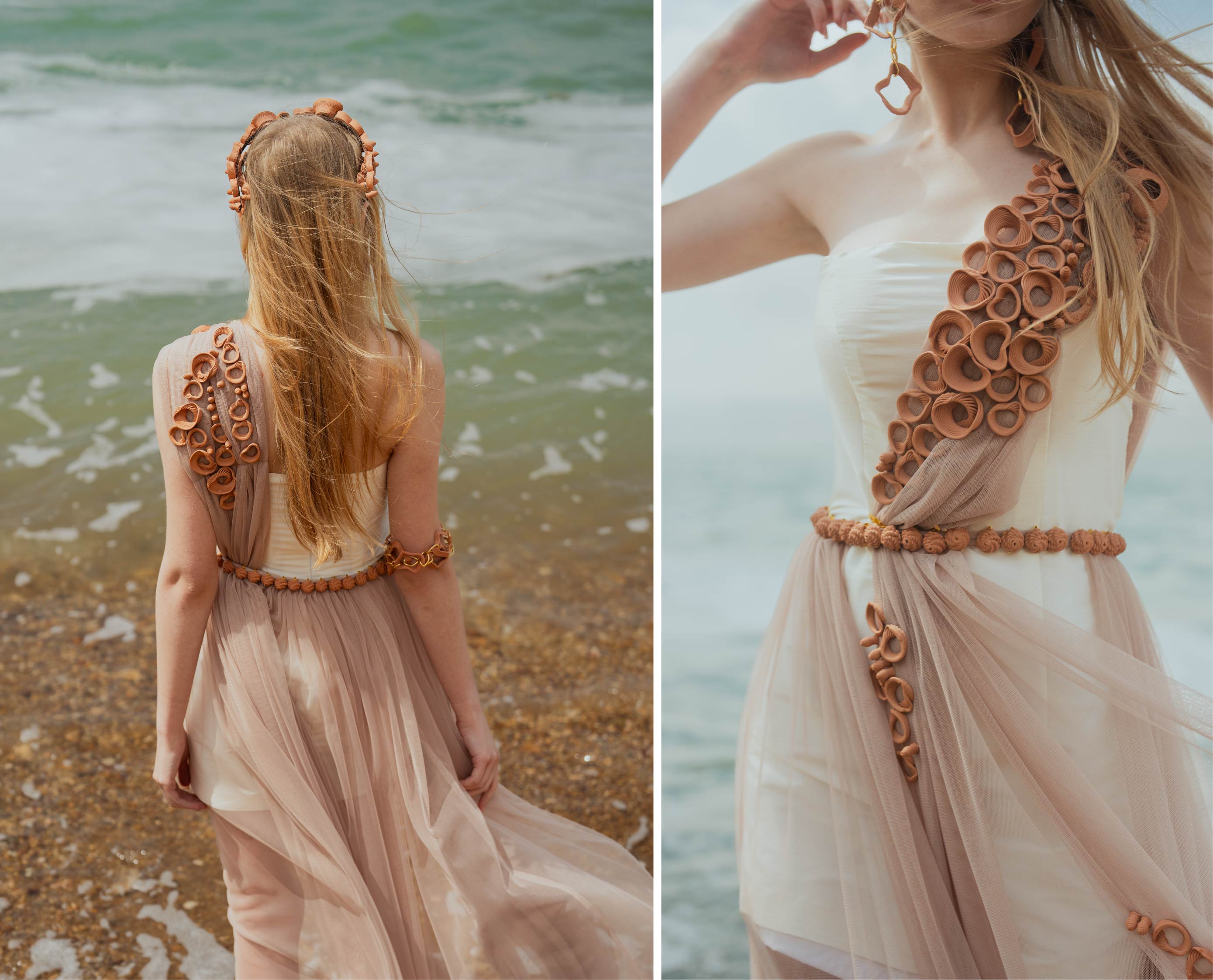
Watch the full final project video.
Fabricademy Project 2026 developed at CPF Makerspace, Amman, Jordan
What is Clay 3D printing?
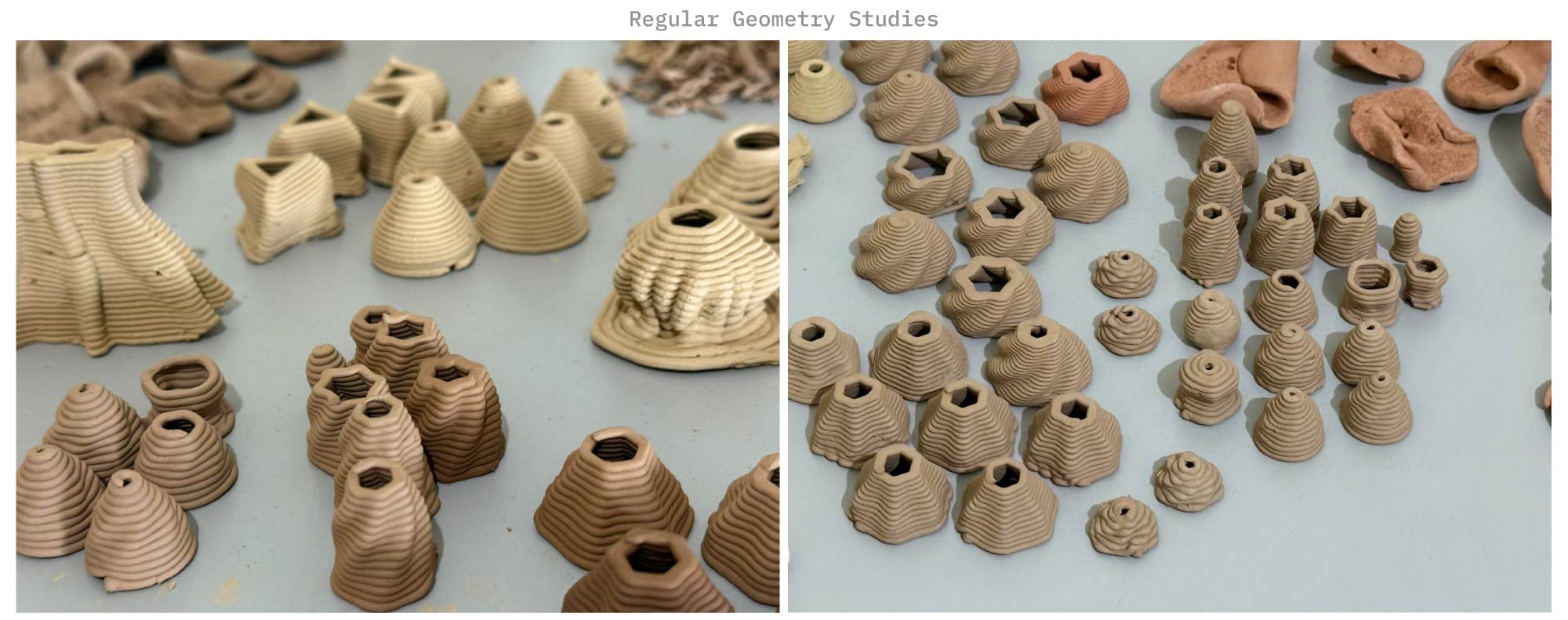
Clay 3D printing (ceramic additive manufacturing) builds objects layer by layer from clay or ceramic paste, instead of utilising traditional processes and tools. The machine extrudes a 'soft clay filament' through a nozzle — like a pastry bag following a 3D model — and the piece is later dried and fired in a kiln, just like traditional pottery.
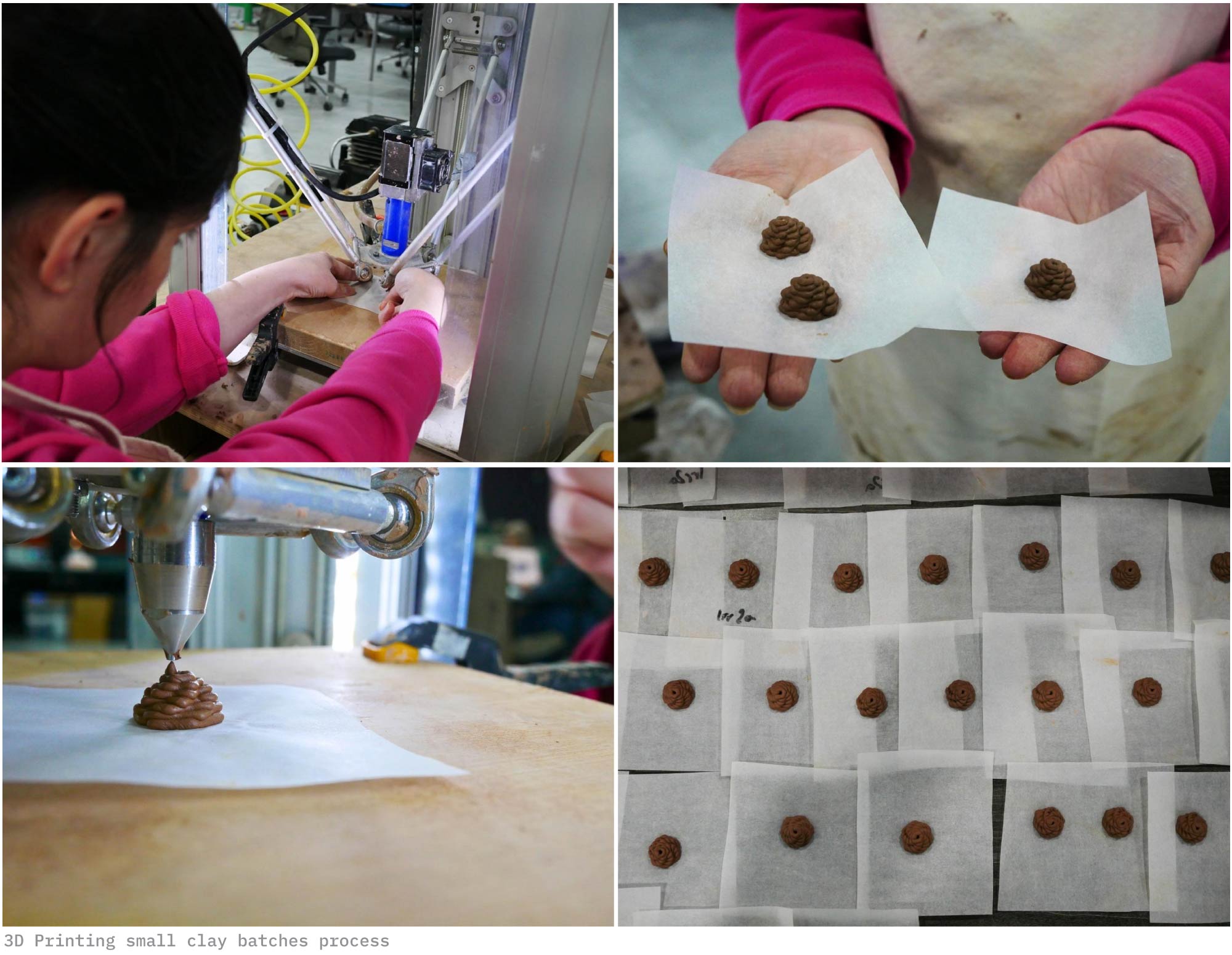
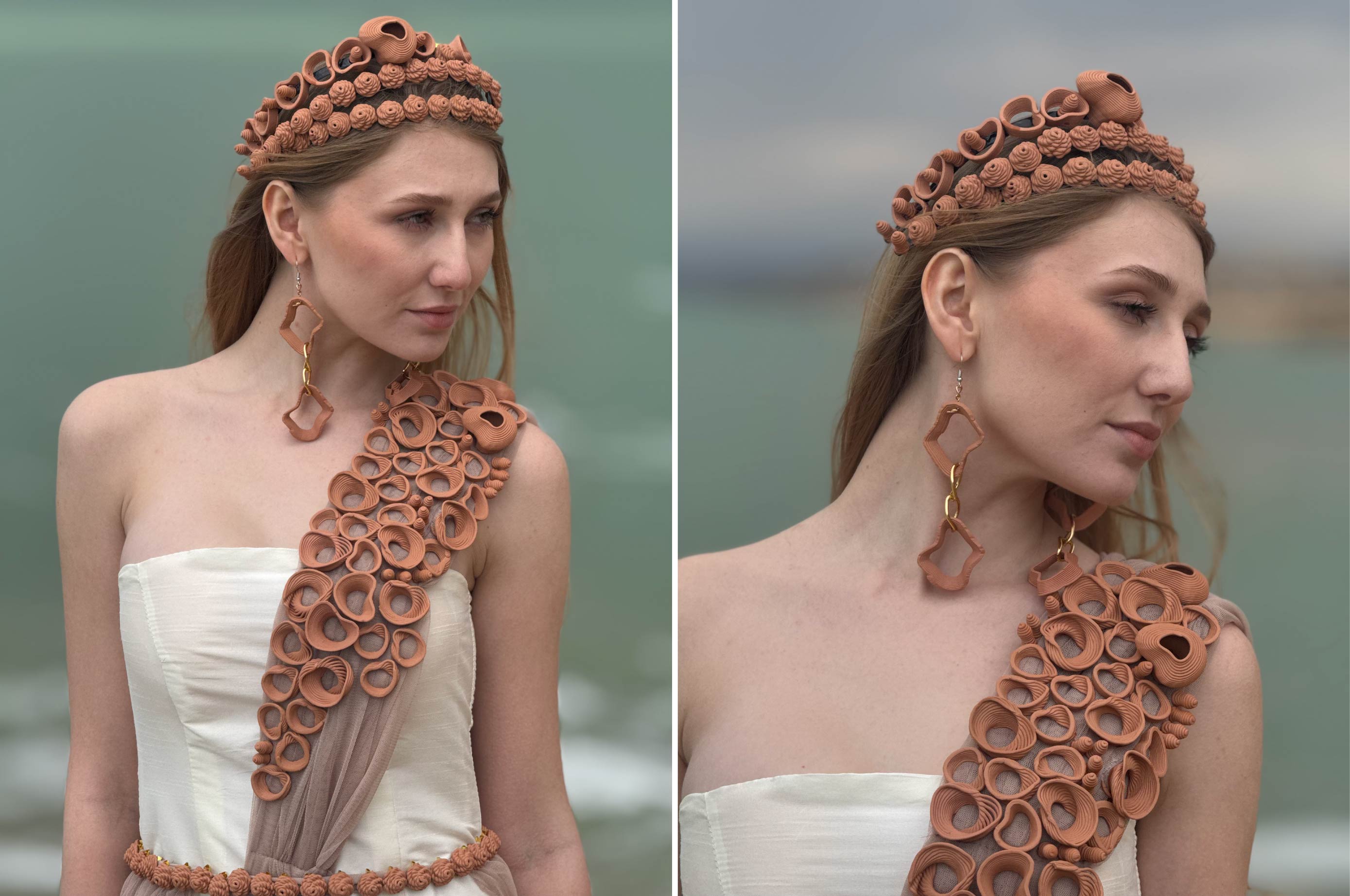
Where textile and fashion designers care about it: terracotta and other ceramic bodies can carry ornamental, organic geometries that are difficult or impossible to produce by hand or with moulds. Such as: lattice structures, undulating surfaces, forms that imitate coral, shell and bone. Resurrect uses a set of 3D-printed terracotta modules that reinterpret ornamental fashion through a sustainable lens.
The material itself matters as much as the process. Terracotta is one of the oldest human materials and one of the most naturaly porous and biodegradable, particularly suited for coral restoration.
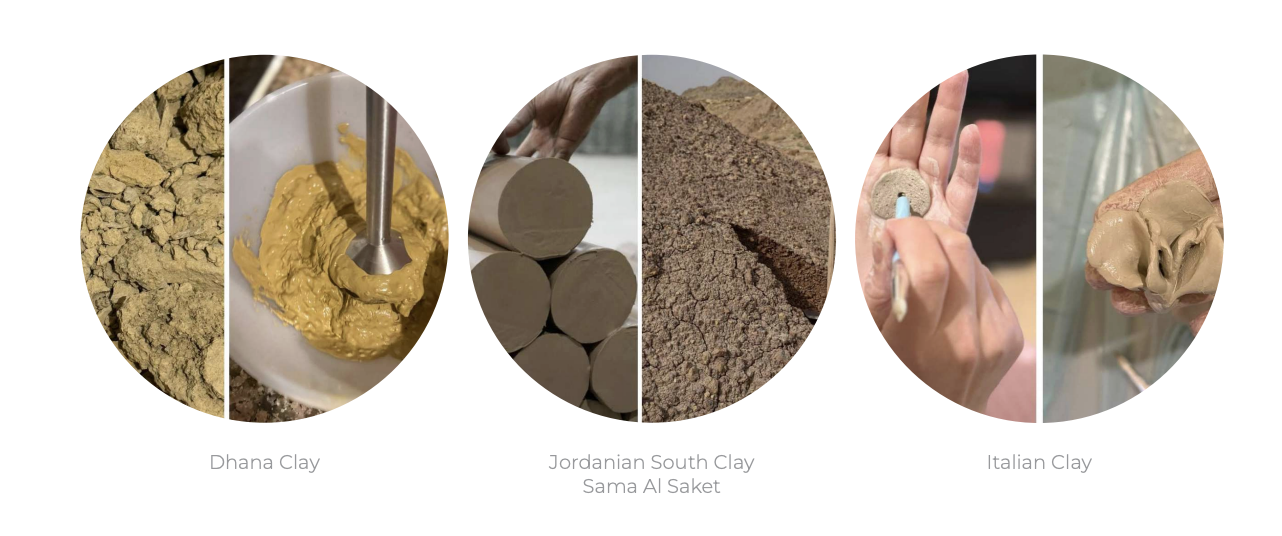
Different types of clay studied and used in the Final Project.
The more-than-human perspective: designing for more than one life
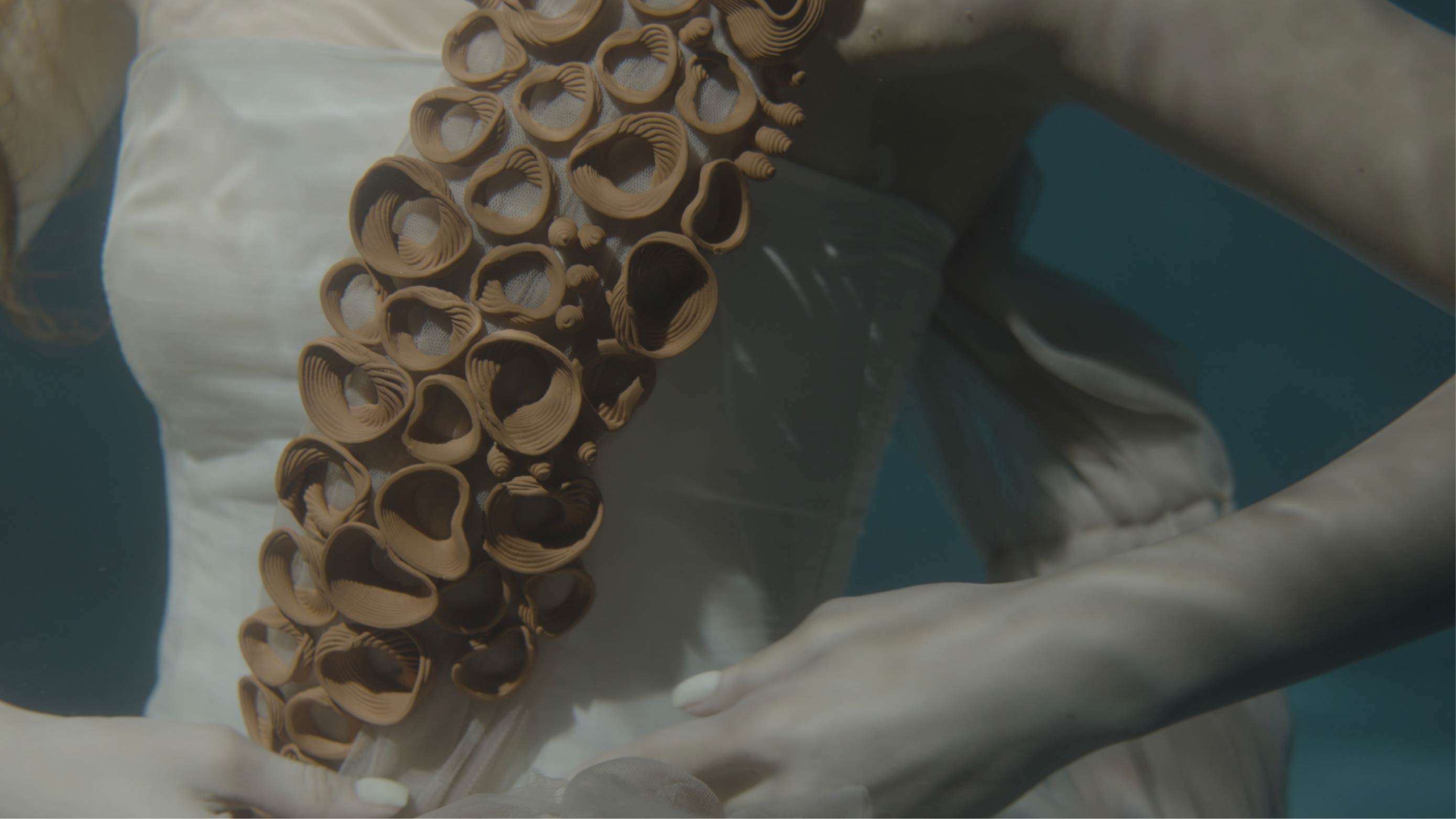
The more-than-human perspective in design asks a simple, destabilising question: who are we designing for? Not only the wearer, not only the buyer - but the organisms, ecosystems and materials that will inherit the object after us.
Resurrect – Worn, Then Inhabited follows a multi-life design approach
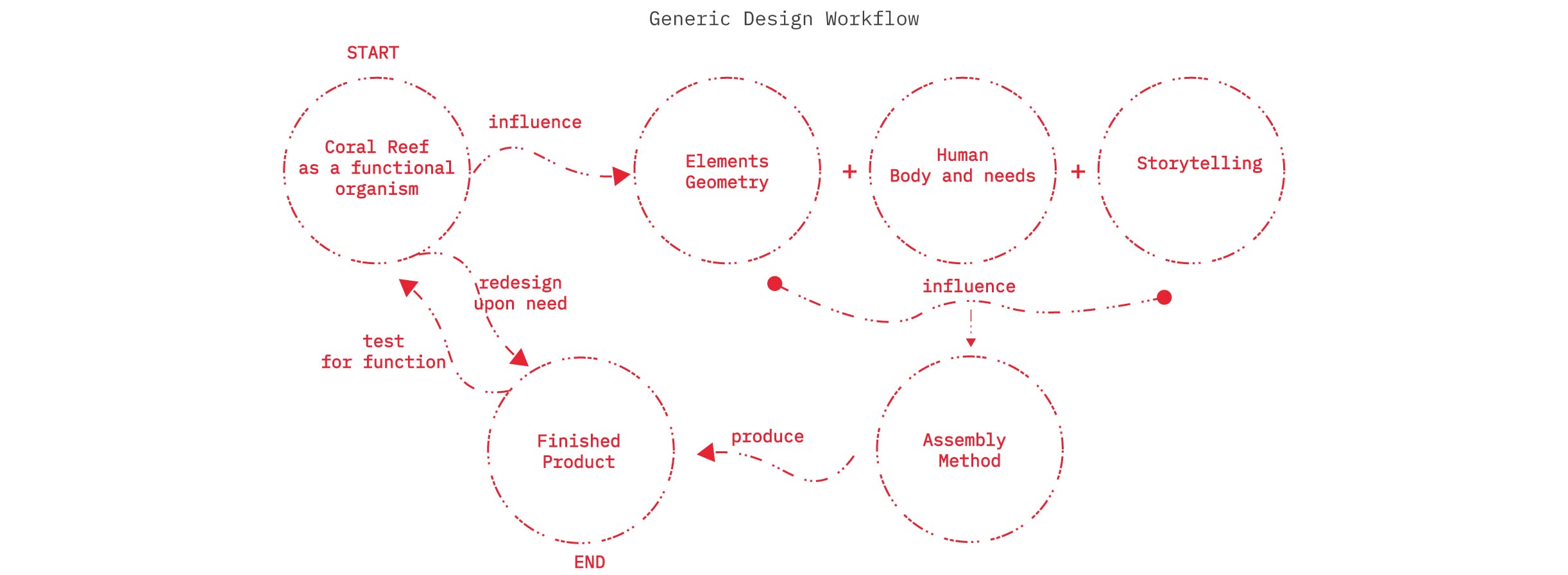
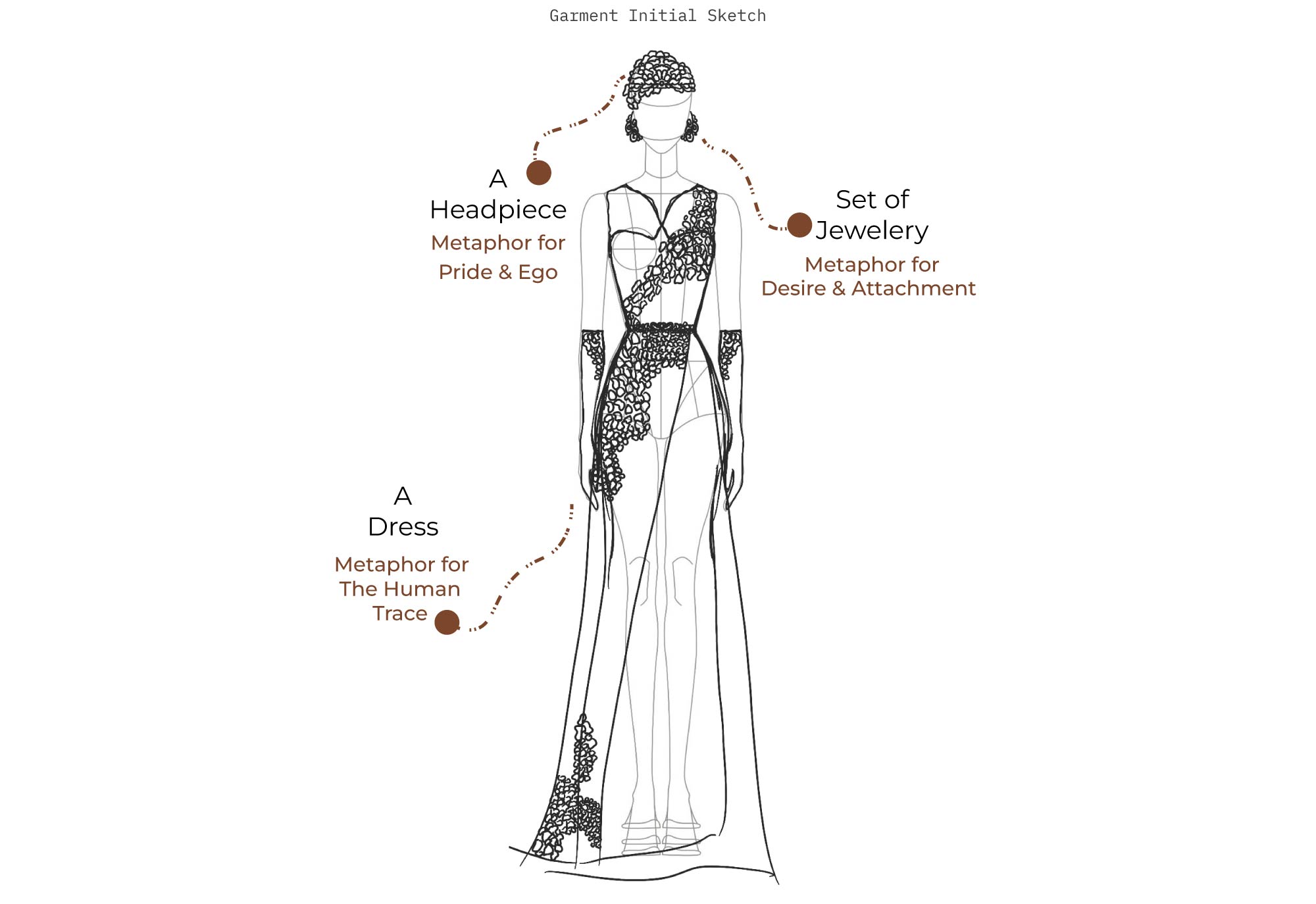
- First life — worn. The terracotta modules are assembled into a wearable, ritual-based piece of ornament.
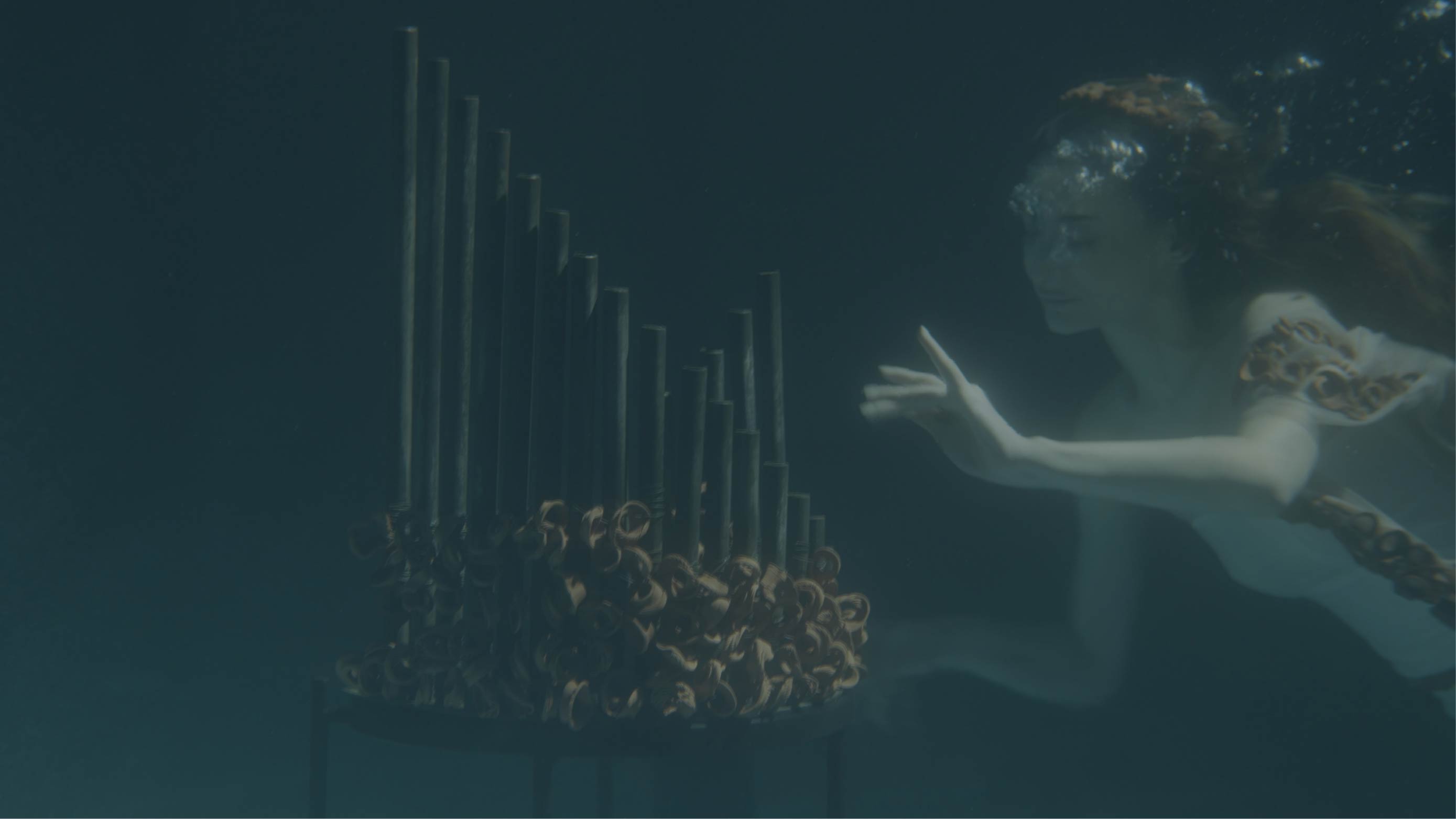
- Second life — inhabited. The garment is disassembled and reassembled underwater on a steel scaffold, where the modules transform into an artificial reef ecosystem, a structure that marine organisms can colonise.
The ritual gives the transition from object to habitat a deliberate, ceremonial quality: the piece is dismantled with intention. Design here questions "human hierarchy over nature", the assumption that objects exist only as long as we use them, and that "waste" is the end of a material's story.
It is a designed relationship between a human artefact and a marine ecosystem.
What this project proves about additive manufacturing education
Projects like Resurrect are built upon skills that every Fabricademy student develops throughout the 6-month program:
-
Digital fabrication & 3D printing, computational design and 3D ceramic printing.
-
Material innovation, biomaterials exploration and biocomposites, terracotta and its properties.
-
Circular design, exploring how materials and objects can be designed for reuse, transformation and extended lifecycles.
-
Interdisciplinary practice, connecting fashion, ecology, biology and technology through hands-on experimentation.
The full documentation including concept, process and thesis is public, as all Fabricademy projects are. Read more through the Thesis PDF.
How to learn this
Resurrect is one of 40+ final projects produced each year by Fabricademy students worldwide — designers, engineers, artists and scientists working at the intersection of Textiles, Digital fabrication and Biology.
The 6-month Fabricademy program gives you the skills behind projects like Resurrect, from 3D printing and digital fabrication to e-textiles, biomaterials, soft robotics and more. Work on 13 hands-on projects with guidance from global experts and local mentors across 20+ labs worldwide.
Applications are still open now for the next cycle. Apply at a lab close to you, or from home, anywhere in the world.
Resurrect — Worn then Inhabited by Simone Kiswani, Fabricademy 2025-26. All project images and documentation are published under Fabricademy's open documentation practice.
Project featued at MIT Media Lab, July 20226 Cambridge (USA).